
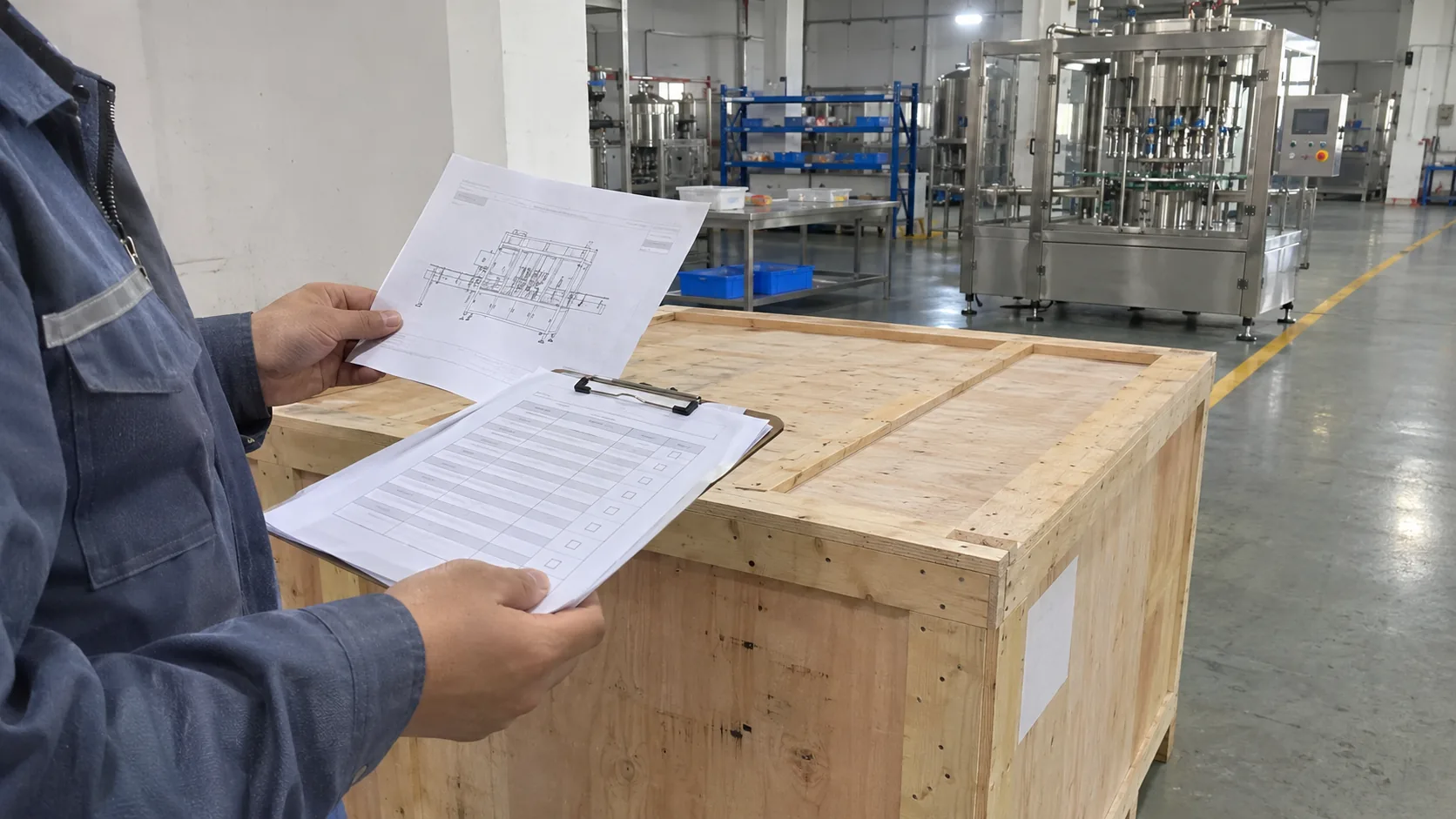
Document questions for a beverage machinery project depend on the equipment, transaction, destination and agreed responsibilities. Before shipment, the relevant parties should confirm which documents apply, who issues them and who reviews destination requirements. A document name alone does not establish that it applies to a particular transaction.
For a clearer equipment inquiry, start with the line scope, the parties to the transaction, the destination and the project stage. Then keep commercial, transport and technical information in a shared checklist, with an identified owner and confirmation status for each item.
Images in this guide are AI-generated illustrations, not photographs of a specific FlowEquip project.
Start with the project details
Before asking for documents, collect the information needed to frame the request:
- Beverage and intended production process
- Equipment or line stages included in the inquiry
- Package type and the equipment details already known
- Buyer, seller and any other parties involved in the transaction
- Country of origin, destination and intended delivery route, if known
- Current stage: quotation, technical review, order, pre-shipment or in transit
- Agreed commercial and delivery terms, if already documented
If a detail is not confirmed, label it “to be confirmed.” Do not fill gaps by assuming a standard machine configuration, a particular tariff classification or a universal destination requirement.
Group document questions by purpose
The following are categories to discuss with the relevant parties. They are not a universal list of documents required for every shipment.
| Question area | Examples to ask about | Who should confirm applicability or issue |
|---|---|---|
| Commercial transaction | Commercial invoice, purchase or sales documents, item descriptions, values and agreed terms | Buyer and seller; confirm any destination filing questions with the buyer’s chosen customs professional |
| Packing and transport | Packing list, package or crate details, transport document and shipment instructions | Seller, freight forwarder or carrier, according to the shipment arrangement |
| Origin information | Whether origin evidence is requested, who can issue it and what supporting details are needed | Seller/export-side party and the buyer’s customs professional |
| Equipment identification | Equipment list, model or serial details, nameplate information, package or module mapping | Equipment supplier or manufacturer, when available and relevant to the transaction |
| Technical handover | Drawings, electrical or utility information, operating instructions, maintenance information, test records or certificates | Supplier/manufacturer and buyer’s technical reviewer; confirm destination requirements with the relevant authority or qualified adviser |
| Destination process | Import filing, classification, valuation, tax, product conformity or local installation questions | Buyer and the appropriate destination-side customs, regulatory or technical professional |
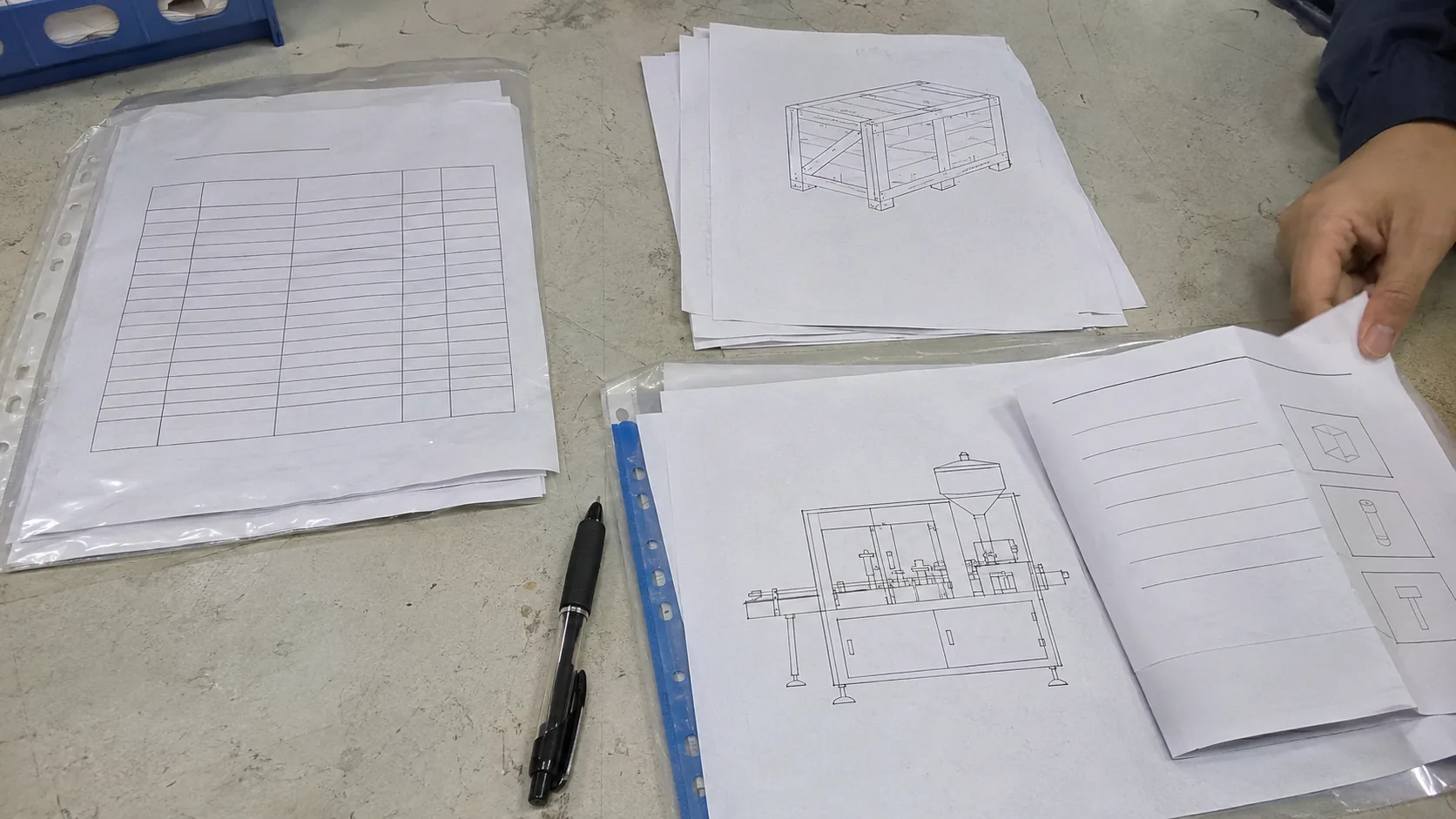
AI-generated document-grouping example. Confirm applicable information for the actual project.
An example may help organize the discussion, but it does not determine whether a document is required or sufficient. The buyer should obtain project-specific confirmation from the party responsible for the relevant filing or technical decision.
Assign an owner and a review point
For each document or open question, record:
- Item or question — use a plain description; avoid treating a suggested document name as a confirmed requirement.
- Project stage — inquiry, quotation, technical review, order, pre-shipment or destination handling.
- Expected issuer — the party that says it can prepare or provide the item.
- Reviewer — the buyer’s named technical, customs, logistics or regulatory contact, as applicable.
- Due point and status — requested, received, under review, confirmed applicable, not applicable, or still open.
- Version and evidence — file name, issue date and the written confirmation or question that supports the status.
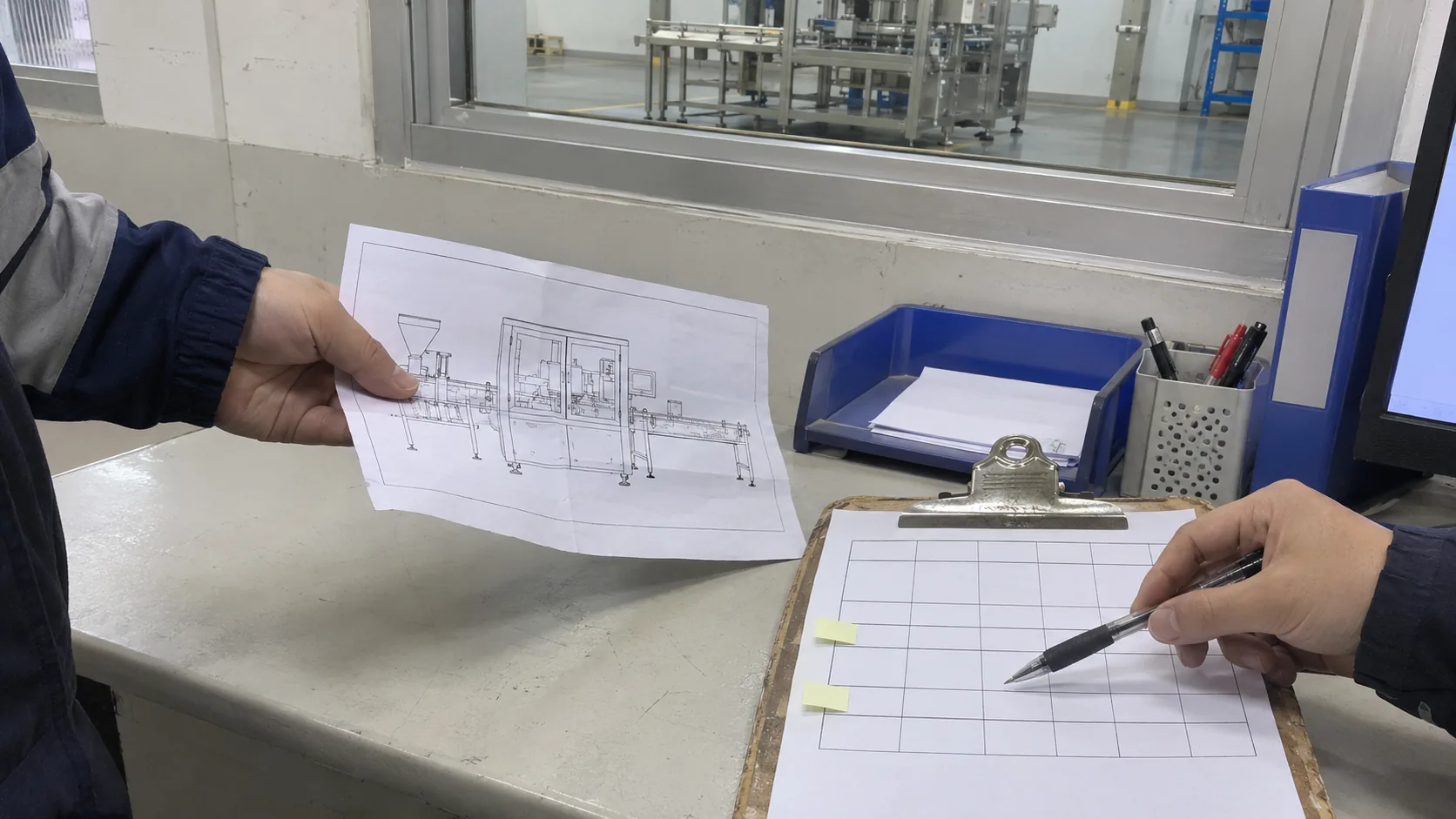
AI-generated example of document handover and tracking; actual owners and review responsibilities are confirmed for each project.
Do not mark a document “approved” merely because it was received. Record who reviewed it, what scope that review covered and any remaining questions.
Ask the questions at the right project stage
During the initial inquiry
- Which equipment stages and items are included in the proposed scope?
- Which project details are still assumptions or awaiting confirmation?
- Which document questions should be raised with the supplier, freight forwarder or destination-side adviser before a proposal is compared?
During technical and commercial review
- Who will issue each requested file, and at what stage can it be provided?
- Which equipment identifiers should appear consistently across the equipment list, nameplates and shipment documents?
- Who will review technical information, and who will confirm destination filing or regulatory questions?
- Which responsibilities are included in the written quotation or contract, and which remain with another party?
Before shipment
- Have the parties reviewed the draft shipment information they are responsible for?
- Are equipment descriptions and packing details consistent with the actual items being shipped?
- Are any destination-side questions still open with the buyer’s customs or technical contacts?
- What correction process and timing have the parties agreed if a draft contains an error?
The parties should follow their written contract and shipment arrangements for approvals, payment milestones and release decisions. This guide does not recommend a particular payment condition.
Keep responsibilities explicit
FlowEquip Global can help organize project information and coordinate document questions between the buyer and relevant suppliers or service providers. The manufacturer or supplier is identified for the specific quotation or order. Destination customs, tax, legal, product-conformity and installation decisions must be confirmed by the party qualified and responsible for that decision in the relevant jurisdiction.
Use a responsibility table such as this and complete it for the actual project:
| Item or decision | Proposed owner | Reviewer | Written status / open question |
|---|---|---|---|
| Equipment scope and identification | To be confirmed | Buyer’s technical contact | Open until the project scope is agreed |
| Commercial and shipment records | To be confirmed under the transaction | Buyer and relevant logistics/customs contacts | Confirm issuer, timing and consistency |
| Destination filing or classification question | Buyer’s designated destination-side professional | Buyer / responsible authority as applicable | Do not treat as confirmed until reviewed |
| Technical or local installation requirement | To be confirmed for the equipment and site | Buyer’s engineering or qualified local reviewer | Record applicable scope and remaining gaps |
Do not assign a task to FlowEquip, a manufacturer, a freight forwarder or a buyer unless that responsibility is confirmed for the relevant transaction.
A short checklist before you send an inquiry
- State the equipment scope and destination you know.
- Identify the project stage and the next decision date, if available.
- List the document questions that remain open.
- Ask who can issue each item and who must review it.
- Separate confirmed requirements from items still awaiting advice.
- Keep customs, tax, legal and technical determinations with the responsible destination-side professional or authority.
- Share sensitive commercial files through an appropriate private channel, not a public comment.
Questions buyers often ask
Is there one standard document list for every beverage machinery shipment?
No universal list is assumed here. The items to confirm depend on the equipment, transaction, destination and written responsibilities. Ask the parties responsible for the shipment and destination review to identify what applies to the specific project.
Who confirms import classification, duties or destination requirements?
The buyer should identify the appropriate customs or other qualified destination-side professional for those determinations. A supplier’s suggested description or an equipment coordinator’s checklist does not by itself confirm a legal classification, tax treatment or filing requirement.
Does receiving a technical certificate confirm that it will be accepted at the destination?
Receipt alone does not establish that a document is applicable, complete or accepted. Confirm the document’s scope, issuer and intended use with the party responsible for the relevant destination or technical review.
When should document questions be raised?
Raise open questions early enough for the responsible parties to respond before the project reaches the relevant order, preparation or shipment stage. The exact timing depends on the transaction and the agreed project schedule.
Discuss a project-specific document question
Have a document question for a beverage equipment project? Share the equipment scope, destination and project stage. FlowEquip Global can help organize the inquiry and coordinate questions with the relevant parties. Destination customs, tax, legal, conformity and installation determinations remain subject to confirmation by the responsible professional or authority.